AI Regulation, Data Center Power, and New Storage
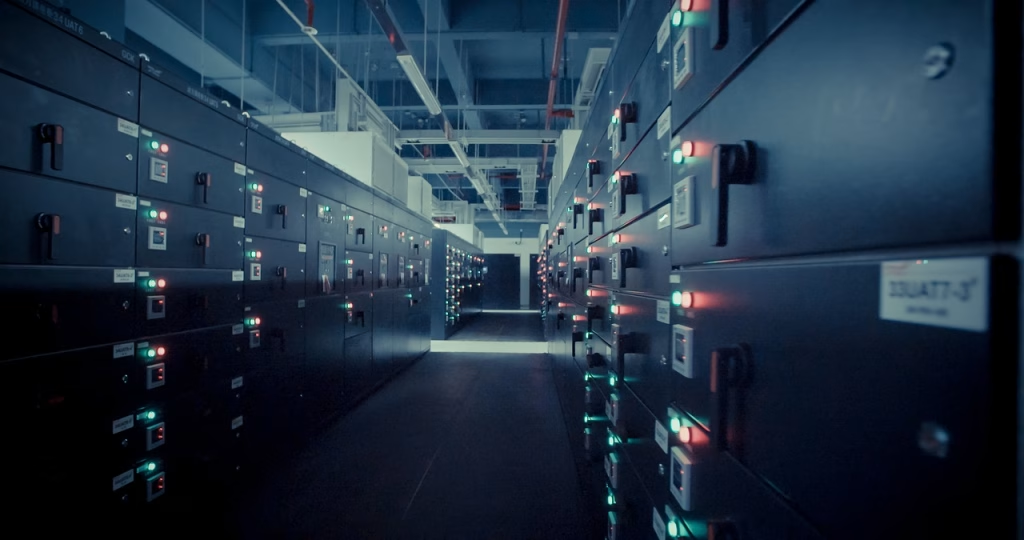
The latest technology news points to a common pressure behind several seemingly separate stories: artificial intelligence is expanding faster than the systems needed to govern, power, and store it.
A newly elected San Francisco congressman is preparing to push for tighter AI oversight. In Virginia’s Data Center Alley, residents are confronting the electricity demands of large computing facilities. Meanwhile, Seagate is betting that hybrid hard-drive and SSD systems still have a place as storage costs rise amid the AI boom.
These developments involve different parts of the technology economy, but they share a practical question: who absorbs the costs of AI infrastructure, and how should those costs be managed?
Scott Wiener brings AI-risk concerns to Congress
Scott Wiener, previously a California state senator, won the open congressional seat associated with Nancy Pelosi’s San Francisco district in a close race. His background includes legislation intended to address risks from advanced artificial intelligence, positioning him as a potential voice in federal AI policy.
In an interview shortly after the result was declared, Wiener repeatedly returned to the concept of recursive self-improvement—the possibility that an advanced AI system could help improve future versions of itself. He argued that development is moving quickly enough to create risks that policymakers may struggle to address after the fact.
His position is not a call to abandon AI. Rather, he has described himself as cautiously optimistic about Congress’s ability to respond while warning that lawmakers need to slow the pace of development and examine the consequences more carefully.
What his arrival could mean
Wiener’s influence will depend on several factors that are not yet clear, including:
- His committee assignments and ability to build support in Congress
- Whether federal lawmakers can agree on a workable approach to AI oversight
- How any federal policy would interact with existing state-level efforts
- Whether regulation focuses on specific high-risk systems or applies more broadly across the industry
The immediate significance of his election is therefore political rather than legislative. He enters Congress with AI safety already central to his public agenda, but the source material does not establish what legislation he will introduce or how much support it will receive.
Data centers are becoming an electricity story
The backlash against new data centers is often portrayed as a broader cultural dispute over technological progress. Reporting from Ashburn, Virginia—part of the region commonly known as Data Center Alley—suggests that electricity may be a more concrete source of conflict.
Large data centers require substantial and continuous power. That creates pressure on local infrastructure and raises questions about where the electricity should come from. The response can be controversial whether facilities draw power from the public grid or generate some of it on site.
The distinction matters because each approach creates different local concerns:
| Power approach | Main issue raised in the reporting |
|---|---|
| Drawing electricity from the grid | Pressure on existing power infrastructure and competition for available electricity |
| Generating power on site | A different set of local concerns associated with operating generation equipment |
| Expanding data-center capacity | Greater demand for reliable, round-the-clock power |
The central trade-off is straightforward: technology companies want more computing capacity, while communities must deal with the physical systems required to support it.
Why the debate is unlikely to disappear
Improving the public image of data centers will not eliminate their electricity demand. Public messaging may change how the industry describes new facilities, but it cannot remove the underlying requirement for dependable power.
That makes energy planning a more durable issue than arguments about whether data centers symbolize progress or overreach. Local communities are likely to focus on practical questions:
- How much electricity will a proposed facility require?
- Who pays for grid upgrades?
- Will existing customers face reliability or cost pressures?
- What happens when several facilities seek power in the same area?
- What impacts result from generating electricity at the facility itself?
The reporting does not provide answers to those questions for every project. It does, however, show why opposition to data centers can be rooted in infrastructure rather than ideology.
Seagate’s FireCuda Forge combines an HDD with a user-supplied SSD
Seagate’s new FireCuda Forge line takes a different approach to the storage problem. The system combines a high-capacity mechanical hard disk with a separate NVMe solid-state drive supplied by the buyer.
The company says the drives are managed through its Alkemi intelligent storage platform. The FireCuda Forge is available in two hard-disk configurations:
| Configuration | Listed price | Included storage |
|---|---|---|
| 8TB | $699 | 8TB HDD; SSD not included |
| 20TB | $899 | 20TB HDD; SSD not included |
The price includes the hard drive, but not the SSD needed for the hybrid setup. Buyers must provide a compatible M.2 2280 NVMe drive.
Compatibility requirements
The required SSD must meet several conditions:
- M.2 2280 form factor
- NVMe interface
- PCIe Gen3 or newer
- Maximum capacity of 1TB
- Minimum sequential read speed of 2,400MB/s
- Minimum sequential write speed of 2,000MB/s
- A model with DRAM cache is recommended
Seagate lists combined-system performance of up to 2,500MB/s read and 2,000MB/s write, along with USB4 connectivity. The product supports Windows 11 and macOS 26 or later, according to the supplied product information.
Those figures describe the combined system under the company’s stated conditions. They should not be treated as a guarantee that every application or file-transfer pattern will perform at those speeds. Results can depend on the SSD selected, workload, thermal conditions, interface, and how the software manages data between the fast and high-capacity portions of the drive.
Who might benefit from a hybrid drive?
The FireCuda Forge may suit buyers who need more capacity than a typical SSD provides but still want faster access to frequently used data.
A hybrid arrangement can make sense when:
- Large files must be stored
- Frequently accessed data can fit within a smaller fast-storage tier
- The buyer already owns a compatible NVMe SSD
- A single external enclosure is preferable to separate HDD and SSD devices
- The user is comfortable managing compatibility and performance limitations
The design is less attractive for someone who wants a simple, fully configured product. The SSD is not included, and the fast tier is limited to 1TB. Buyers must also verify that their chosen NVMe drive meets the required performance specifications.
The product therefore sits between a conventional external hard drive and a large, all-SSD system. It promises a compromise rather than eliminating the underlying trade-off between capacity, speed, and cost.
AI is affecting storage prices as well as computing demand
The supplied reporting describes storage prices as having risen sharply after reaching unusually low levels earlier in the decade. It attributes the pressure to the AI boom and cites market data showing that some SSDs now cost two to three times their previous lows.
Mechanical drives have also reportedly become more expensive. The example provided is a Seagate Exos 24TB drive that rose from $298.99 in the summer of 2025 to $699.99 by August 2026, according to the cited PCServerParts data.
These figures are examples rather than a complete picture of the storage market. Prices vary by capacity, model, seller, enterprise or consumer positioning, and time of purchase. The broader point is that AI infrastructure is increasing demand for storage as well as computing capacity.
That demand may affect buyers by making high-capacity storage more expensive or by narrowing the value gap between older mechanical technology and newer solid-state products.
The larger picture: AI infrastructure has physical limits
The three main developments fit together:
- Policy: Scott Wiener is entering Congress with concerns about the pace and risks of advanced AI.
- Power: Data-center growth is exposing conflicts over electricity supply and local infrastructure.
- Storage: New products are responding to demand for high-capacity, responsive data storage.
AI policy therefore cannot be treated only as a question of software behavior. The technology also depends on electricity networks, data-center construction, storage manufacturing, and public decisions about who bears the associated costs.
For policymakers, the challenge is to address potentially dangerous AI capabilities without ignoring the infrastructure required to build and operate them. For communities, the central issue may be whether local power systems can support new facilities and how the costs are distributed. For consumers and businesses, storage buyers face a more immediate calculation about whether a hybrid system provides enough speed and capacity to justify its price and setup requirements.
The next phase of the AI debate will be shaped not just by what these systems can do, but by how much power, hardware, and political consent they require.
Sources
- The Download: Pelosi’s successor targets AI and data centers face power woes, Technology Review, published November 10, 2026. https://www.technologyreview.com/2026/11/10/1148150/the-download-pelosi-successor-ai-regulation-data-center-backlash/
- Seagate’s new hybrid drive raises some old questions, Ars Technica, published November 10, 2026.
Leave a Reply