Texas’s Fragile AI Boom Meets a New Energy and Security Test
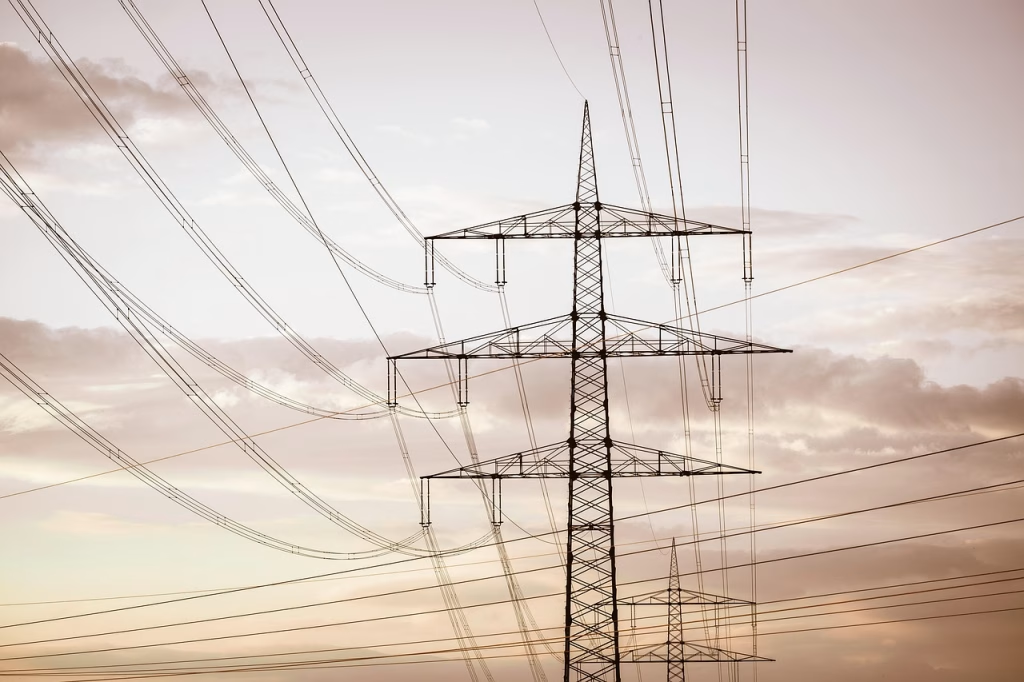
Texas has become the center of America’s artificial-intelligence data-center expansion. The state’s political shift, however, is putting that growth model under pressure just as concerns about electricity, infrastructure, and technology security are intensifying.
The developments described in reporting published on November 5 and 6, 2026 point to three connected questions:
- Can Texas add enough power and grid capacity for large AI facilities?
- Will new state and local leaders impose tighter conditions on data-center development?
- Can the United States protect sensitive AI-chip relationships from alleged foreign intelligence activity?
The answers will affect more than Texas. They could help determine whether America’s broader AI infrastructure buildout accelerates, becomes more expensive, or encounters political resistance.
Why Texas became a focal point for AI data centers
Texas has been the fastest-growing data-center market in the United States and a major destination for large technology companies’ AI infrastructure projects, according to the source material.
AI data centers can require large, concentrated amounts of electricity. Their demand affects more than a single property line. Utilities and regulators must consider:
- Whether generation can keep pace with new facilities
- How quickly transmission and distribution infrastructure can be expanded
- Who pays for new power plants, substations, and grid connections
- Whether existing customers face higher costs or reliability risks
- How data-center construction interacts with renewable energy and emissions goals
That makes data-center policy an energy-policy issue as much as a technology or real-estate issue.
Texas’s election results change the political outlook
The November 5 report describes a major Democratic breakthrough in Texas:
- James Talarico won the state’s U.S. Senate seat.
- Gina Hinojosa won the governor’s race.
- Democrats are expected to control the Texas House for the first time in 24 years.
The report says Democrats made data centers a central campaign issue. That does not by itself establish what laws will pass, but it changes the political environment for hyperscalers and developers with ambitious Texas plans.
A new governing coalition could seek greater oversight of:
- The pace and location of data-center construction
- Electricity demand and grid planning
- Tax treatment or public incentives
- The allocation of infrastructure costs
- Emissions associated with backup or dedicated power generation
The source material does not specify the incoming officials’ proposed legislation, nor does it establish that existing projects will be canceled. The more defensible conclusion is narrower: projects that once appeared primarily to be engineering and commercial decisions are likely to receive more political scrutiny.
What a political “wall” could mean for America’s AI buildout
The source material describes growing anxiety that the U.S. AI expansion could stall. That risk should not be read as a prediction that construction will stop nationwide. Rather, it reflects the possibility that the infrastructure bottlenecks surrounding AI become harder to resolve.
A data-center project can be delayed even when demand for computing capacity remains strong. Potential obstacles include:
- Power availability: A site may be attractive but unable to secure electricity on the developer’s desired schedule.
- Grid upgrades: New substations and transmission projects may require planning, financing, and approvals.
- Local opposition: Residents and local governments may object to facility development or perceived effects on utility bills.
- State policy changes: New rules can alter project economics after companies have made preliminary commitments.
This creates a distinction that is often lost in AI investment narratives: demand for computing does not guarantee that the physical infrastructure can be built quickly or cheaply enough to meet it.
The energy-policy stakes extend beyond Texas
The same November 5 report says Democrats have taken control of both chambers of Congress while Donald Trump remains president. On the source material provided, that combination is not expected to produce major federal climate and energy legislation. State and local governments may therefore become the more immediate arena for disputes over data centers and energy infrastructure.
State-level decisions can influence:
- Grid planning and utility regulation
- Renewable-energy development
- Greenhouse-gas emissions
- Permitting and siting
- Local tax policy
- The terms under which large electricity users connect to the grid
For technology companies, this may produce a more fragmented operating environment. A strategy that works in one state may not transfer cleanly to another if power markets, permitting rules, and public attitudes differ.
For residents and ratepayers, the central question is whether data-center growth creates enough economic value to justify the infrastructure costs and potential environmental effects. The source material does not provide evidence resolving that question. It does, however, show why the debate is moving from technology circles into mainstream energy and electoral politics.
A proposed federal infrastructure bill could alter the timetable
The source material also reports that the Senate is scheduled to vote on November 9 on the Bipartisan American Affordability and Jobs Act, described as legislation intended to reduce regulatory delays and speed up U.S. energy-infrastructure construction.
Because the provided excerpt ends before explaining the bill’s provisions, its likely effect on data centers cannot be assessed from the available information. A vote being scheduled is not the same as enactment, and even enacted legislation would not necessarily resolve local siting disputes or the practical limits of grid construction.
Readers evaluating the bill should distinguish among three stages:
- Proposed legislation: The measure has been introduced or scheduled for consideration.
- Passage: Both the required legislative steps and presidential action, if applicable, have occurred.
- Implementation: Agencies, utilities, and local authorities have applied the new rules in actual projects.
That distinction matters because infrastructure timelines often depend on implementation details rather than broad promises to cut red tape.
The alleged China-linked spying case raises a different AI risk
A separate report published on November 6 concerns Nvidia CEO Jensen Huang and an alleged Chinese intelligence operation.
According to the source material, The New York Times reported that China’s Ministry of State Security recruited Alice Huang, an executive at Megaspeed, to gather information about American AI chips and potentially influence Nvidia’s access to advanced chips in China. The report also described Alice Huang as having a close relationship with Jensen Huang and relationships with senior figures in the AI-chip industry.
The allegations remain allegations. The source material says:
- Alice Huang and Jensen Huang are not related.
- The reported relationship was described as close.
- President Trump was briefed about the relationship the previous year but took no action.
- Three House committees have asked Jensen Huang to participate in a joint, closed-door briefing about his interactions with Alice Huang.
The material does not provide a court finding, public intelligence assessment, or response from the people accused. It would therefore be inaccurate to present the alleged recruitment or espionage activity as proven.
Even so, the reported case illustrates why AI security concerns extend beyond model software. The relevant risks can arise through:
- Executive relationships
- Commercial customers
- Industry networking
- Semiconductor supply chains
- Export-control information
- Access to strategic decision-makers
The episode also shows the tension between legitimate business relationships and national-security scrutiny. A customer or industry contact may have access to valuable information without every relationship being evidence of wrongdoing. Determining where ordinary commercial contact ends and intelligence activity begins requires evidence, investigation, and due process.
How the two stories fit together
Texas’s data-center politics and the alleged chip-espionage case concern different parts of the AI economy, but they reveal the same underlying reality: AI expansion depends on physical infrastructure, political permission, and trusted networks.
| Pressure point | What is at stake | Main uncertainty |
|---|---|---|
| Electricity and grid capacity | Whether new AI facilities can operate at the planned scale | How quickly generation and grid upgrades can be delivered |
| State and local politics | Whether projects receive permits, incentives, and public support | Which policy changes the new Texas leadership will pursue |
| Federal infrastructure policy | How fast energy projects can be approved and built | Whether the proposed legislation passes and how it is implemented |
| Semiconductor security | Protection of sensitive industry and executive information | Whether the reported allegations are substantiated |
| Public confidence | Whether AI expansion is viewed as economically beneficial and responsibly managed | Who bears the costs and how transparently decisions are made |
The practical lesson for companies is that an AI buildout cannot be evaluated solely through projected demand for computing. Developers must also account for political durability, power procurement, regulatory exposure, and security controls.
What to watch next
Several developments will clarify whether Texas’s AI boom is slowing, changing shape, or merely becoming more contested.
In Texas
Watch for:
- The incoming administration’s data-center and energy proposals
- Legislative treatment of utility costs and project incentives
- Local government responses to large facility applications
- Changes to grid-planning and permitting priorities
- Whether major developers delay, relocate, or revise projects
A campaign issue becomes a market-changing policy only when it is translated into legislation, regulation, budgets, or local decisions.
In Washington
The near-term item identified in the source material is the Senate’s scheduled November 9 vote on the Bipartisan American Affordability and Jobs Act. The outcome, the bill’s final contents, and any subsequent implementation will matter more than its headline objective alone.
Congressional inquiries into Jensen Huang’s interactions with Alice Huang may also reveal whether lawmakers have evidence beyond the reported allegations and whether the matter leads to new oversight or security measures.
For the AI industry
Companies building or operating AI infrastructure should pay attention to four practical questions:
- Who bears the cost of new energy infrastructure?
- How stable are the political assumptions behind a project?
- What information can business relationships expose?
- Which claims are documented facts, and which remain allegations or forecasts?
Those questions are less dramatic than projections about an unstoppable AI boom, but they are more useful for understanding what happens next.
Sources
- The Download: Texas’s fragile AI boom and energy policy shifts, published November 5, 2026: https://www.technologyreview.com/2026/11/05/1144908/the-download-texas-fragile-ai-boom-us-energy-policy/
- China reportedly recruited AI exec to spy on Jensen Huang, published November 6, 2026.
Leave a Reply