Why a British Soldier’s SIM Card Order Mattered
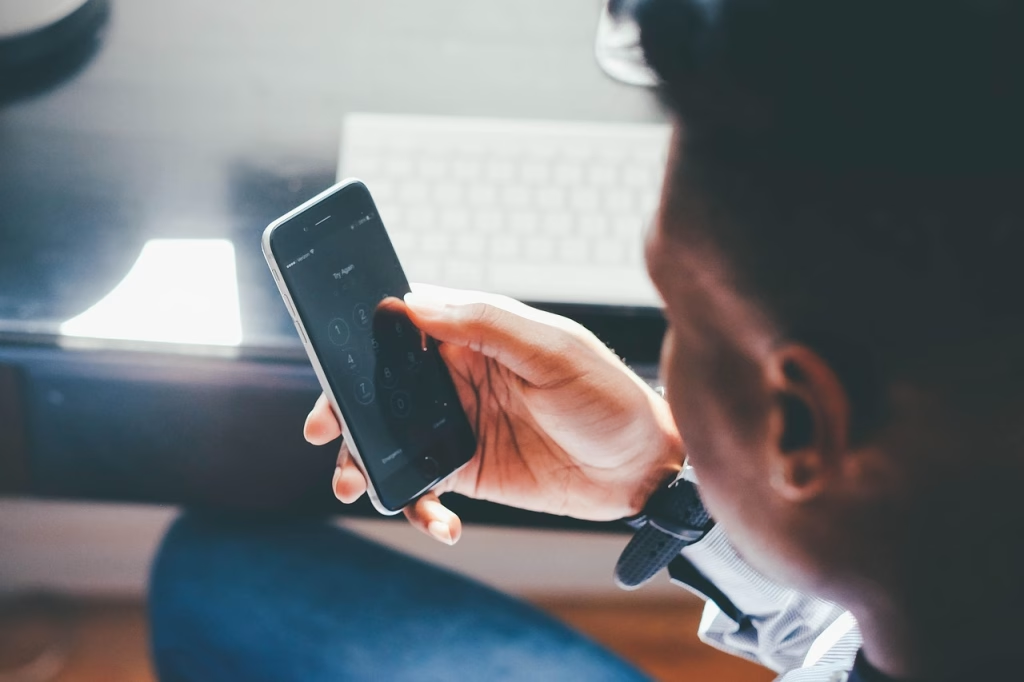
A British Army corporal was court-martialed after refusing to remove the SIM card from his personal phone before a deployment to Estonia. The decision later became part of a blackmail case after nude photographs were stolen from the device.
The episode illustrates why military communications rules can apply to ordinary personal phones, not just classified equipment. A SIM card is only one part of a mobile device’s security profile, but it can help expose a user’s identity, location, network relationship, and communications.
What happened to the soldier
According to a 21-page British appeals court document reported by Ars Technica, Daniel Barton-Kennedy was serving as a corporal in the 1st Battalion of the Duke of Lancaster Regiment when his unit prepared for Exercise Eastern Warrior in Estonia.
On January 7, 2026, while still in the United Kingdom, Barton-Kennedy and other soldiers were instructed to:
- Remove SIM cards from personal electronic devices
- Disable location settings
- Use a trusted virtual private network, or VPN
The unit received further briefings and reminders after arriving in Estonia. The deployment took place in Tapa, approximately halfway between Tallinn and Estonia’s border with Russia.
Barton-Kennedy did not follow the instruction to remove the SIM card. His phone was later hacked, according to the account, and nude photographs of him were stolen and used to blackmail him.
He eventually pleaded guilty at court martial to disobeying a lawful command. His rank was reduced, and he was sentenced to 10 months in detention.
The supplied material does not establish every technical detail of the compromise. It does not specify how the attackers accessed the phone, whether the photographs came directly from local storage or a synchronised account, or whether the SIM card itself was the entry point. The documented link is that he disregarded the operational-security order and later became the victim of a phone-related blackmail incident.
Why remove a SIM card?
A SIM card connects a phone to a mobile network. Depending on the device, carrier, and network configuration, mobile-network records can associate a handset and subscriber with communications activity and approximate locations.
Removing the card can therefore reduce some forms of exposure:
- The phone cannot use that SIM to authenticate to its normal mobile network.
- Cellular calls and text messages associated with the card will not function normally.
- Network-based location information connected to that subscriber relationship is reduced.
- The device is less directly tied to the user’s domestic mobile account while abroad.
That does not make a phone anonymous or secure. A handset may still reveal information through Wi-Fi, Bluetooth, applications, cloud services, device identifiers, or location features. A phone can also be compromised through methods that have nothing to do with the SIM card.
The instruction was one part of a broader security procedure, not a claim that removing one component would eliminate every threat.
Why location settings and a VPN were part of the same order
The three instructions addressed different risks.
Removing the SIM card
This limited the phone’s connection to its ordinary cellular identity and network account.
Switching off location settings
Location services can allow applications and the operating system to use GPS, nearby wireless networks, Bluetooth signals, and other data to determine or infer where a device is. Disabling those settings can reduce the amount of location information available to apps, although it cannot guarantee that no location-related data will ever be generated.
Using a trusted VPN
A VPN can encrypt some internet traffic between a device and the VPN service, particularly when using networks that might otherwise expose traffic to local observers. It does not protect a phone from malicious software, compromised accounts, unsafe applications, or a hostile device environment.
Nor does a VPN erase all identifying information. The VPN provider, websites, apps, and the device itself may still have visibility into different parts of the user’s activity.
Together, the instructions sought to reduce cellular identification, location leakage, and interception of network traffic.
The personal-phone problem
The incident also shows why personal devices can become a military security concern even when they contain no official documents.
A soldier’s private phone may hold:
- Personal photographs
- Contacts and message histories
- Email and social-media accounts
- Authentication codes or account access
- Location histories
- Information about colleagues, routines, and movements
An attacker does not necessarily need classified files to create harm. Private material can be used for extortion, intimidation, impersonation, or social engineering. In this case, the stolen nude photographs reportedly provided leverage for blackmail.
Personal devices can also expose people around the user. A contact list, photograph, or message may reveal relationships and patterns that the owner did not regard as sensitive.
What the case does—and does not—show
The case supports several clear conclusions:
- Operational-security orders can apply to personal electronics. The fact that a phone belongs to a soldier personally does not override a lawful deployment instruction.
- The victim and the rule-breaker can be the same person. Barton-Kennedy was reportedly blackmailed after the compromise, but he was also disciplined for failing to follow the order.
- Removing a SIM card is not a complete defence against hacking. It is one control within a broader security policy.
- The technical path to the stolen photographs remains unclear from the supplied account. It would be inaccurate to describe the SIM card as definitively causing the hack.
The court martial concerned disobedience of a lawful command, not a finding that Barton-Kennedy deliberately helped an adversary or intended to expose military information. The available material does not describe such an allegation.
Practical lessons for people travelling with sensitive devices
The details of a military order cannot be transferred wholesale to civilian travellers, but the underlying habits can be useful when taking a phone into a high-risk environment.
Before travel, users should consider:
- Whether a personal phone is needed at all
- Which accounts and files are stored locally
- Whether automatic cloud synchronisation should be paused
- Whether location history and unnecessary permissions can be disabled
- Whether the device and applications are fully updated
- Whether strong, unique passwords and multifactor authentication are enabled
- Whether a trusted VPN is appropriate for the networks being used
- How the device will be handled if it is lost, inspected, or seized
The right measures depend on the threat and on the organisation’s instructions. A civilian should not assume that a VPN, a new SIM, or a factory reset alone makes a device safe. Personnel subject to military or workplace rules should follow the specified procedure rather than substituting their own workaround.
The broader security lesson
The Estonia deployment took place in a location where communications discipline was especially significant. Yet the incident is also about predictable human behaviour: a user was given a clear instruction, treated it as optional, and later faced personal consequences when the device became a source of vulnerability.
Operational security often depends on several modest controls being followed together. None may be perfect on its own. Their value comes from reducing the information an exposed device can reveal and limiting the ways an attacker can connect that information to a person, unit, or location.
That is why a SIM card removal order can matter even when it seems disconnected from the files and photographs a phone contains.
Sources
- Ars Technica, “British soldier ignored order to pull his SIM card, then got blackmailed,” published November 7, 2026: https://arstechnica.com/security/2026/11/british-soldier-ignored-order-to-pull-his-sim-card-then-got-blackmailed/
Leave a Reply